The Science of Strength Training
07. 10. 2026
Resistance training is universally recognized as a foundational pillar of lifelong health, fitness, and functional independence.
From preserving muscle mass to lowering the risk of chronic metabolic conditions, lifting weights does far more than just build aesthetic muscle. However, for years, fitness enthusiasts and health professionals alike have debated the exact formulas needed to maximize results. How heavy do you need to lift? Is training to complete muscle failure necessary? Do free weights beat machines?
To answer these questions, the American College of Sports Medicine (ACSM) published an updated Position Stand in Medicine & Science in Sports & Exercise by Brad S. Currier, Stuart M. Phillips, Brad J. Schoenfeld, and colleagues. Synthesizing data from 137 systematic reviews involving over 30,000 adult participants, this comprehensive overview provides clarity on what truly drives strength, muscle growth, power, and physical performance.
Here is an in-depth, evidence-based breakdown of what modern exercise science tells us about optimizing resistance training.
1. The Core Baseline: Any Resistance Training Works
The fundamental finding of this massive review is reassuringly simple: performing structured resistance training on a regular basis produces dramatic improvements across every marker of physical fitness compared to remaining sedentary.
Engaging in progressive weight training consistently increases maximum voluntary strength, expands muscle fiber cross-sectional area (hypertrophy), enhances explosive muscle power, builds local muscular endurance, and speeds up muscle contraction velocity. Furthermore, it directly translates into real-world functional benefits, including improved gait speed, better balance, and easier stair climbing.
While specific tweaks to your program can optimize individual goals, getting moving and applying progressive overload is responsible for the vast majority of your physical adaptations.
2. Maximizing Strength vs. Muscle Growth: Choosing the Right Drivers
While strength and muscle hypertrophy often go hand-in-hand, the review highlights that their primary training drivers are distinct.
Building Maximum Strength
If your primary goal is lifting heavier weights, load and range of motion are king. The research demonstrates that voluntary muscular strength is optimized under specific conditions:
- Heavy Loads: Lifting loads equal to or greater than 80% of your one-repetition maximum (1-RM) yields significantly superior strength gains compared to lighter loading.
- Full Range of Motion: Executing exercises through their full anatomical range of motion drives greater strength adaptations than partial repetitions.
- Sufficient Volume: Performing two to three sets per exercise produces noticeably better strength gains than doing single sets.
- Strategic Exercise Order: Placing major multi-joint exercises at the beginning of your workout allows you to lift heavier while fresh, maximizing strength gains in those specific movements.
- Frequency: Training each major muscle group at least two sessions per week is superior to single-session weekly routines.
Driving Muscle Hypertrophy (Muscle Growth)
If your primary objective is building muscle size, the rules are much more flexible regarding load, but stricter regarding weekly volume:
- Volume is Key: Performing higher weekly volume—specifically 10 or more sets per muscle group per week—drives greater muscle growth than low-volume routines of fewer than 5 sets per week.
- Load Flexibility: Muscle hypertrophy occurs across a wide spectrum of light to heavy loads (anywhere from 30% to 85% of 1-RM), provided the sets are performed with high effort and taken close to fatigue.
- Eccentric Focus: Incorporating eccentric overload, where the lowering phase of an exercise is emphasized or loaded heavier, further enhances muscle growth.
3. Power, Velocity, and Real-World Physical Function
Muscle power—the ability to exert force quickly—is essential not only for athletic performance but also for maintaining agility and preventing falls as we age.
To maximize muscle power and contraction velocity, the evidence favors moderate loads between 30% and 70% of your 1-RM. Exercises should be performed with explosive intent during the concentric phase (the lifting portion of the movement). Modalities like power-focused resistance training, Olympic-style weightlifting, and plyometrics are particularly effective. Keeping total repetitions per set moderate prevents fatigue from slowing down your movement speed.
Importantly, the review found that power training—moving weights quickly during the lifting phase—produces superior improvements in real-world functional mobility, gait speed, and balance compared to slow, traditional strength training.
4. What Doesn't Matter as Much as You Think
Perhaps the most liberating insight from the updated ACSM position stand is how many popular training variables have little to no impact on primary outcomes, provided total volume and effort are matched.
- Training to Absolute Failure: You do not need to push every set until your muscles physically collapse. Stopping one to three repetitions short of momentary muscle failure yields comparable strength and muscle growth with significantly less cumulative fatigue.
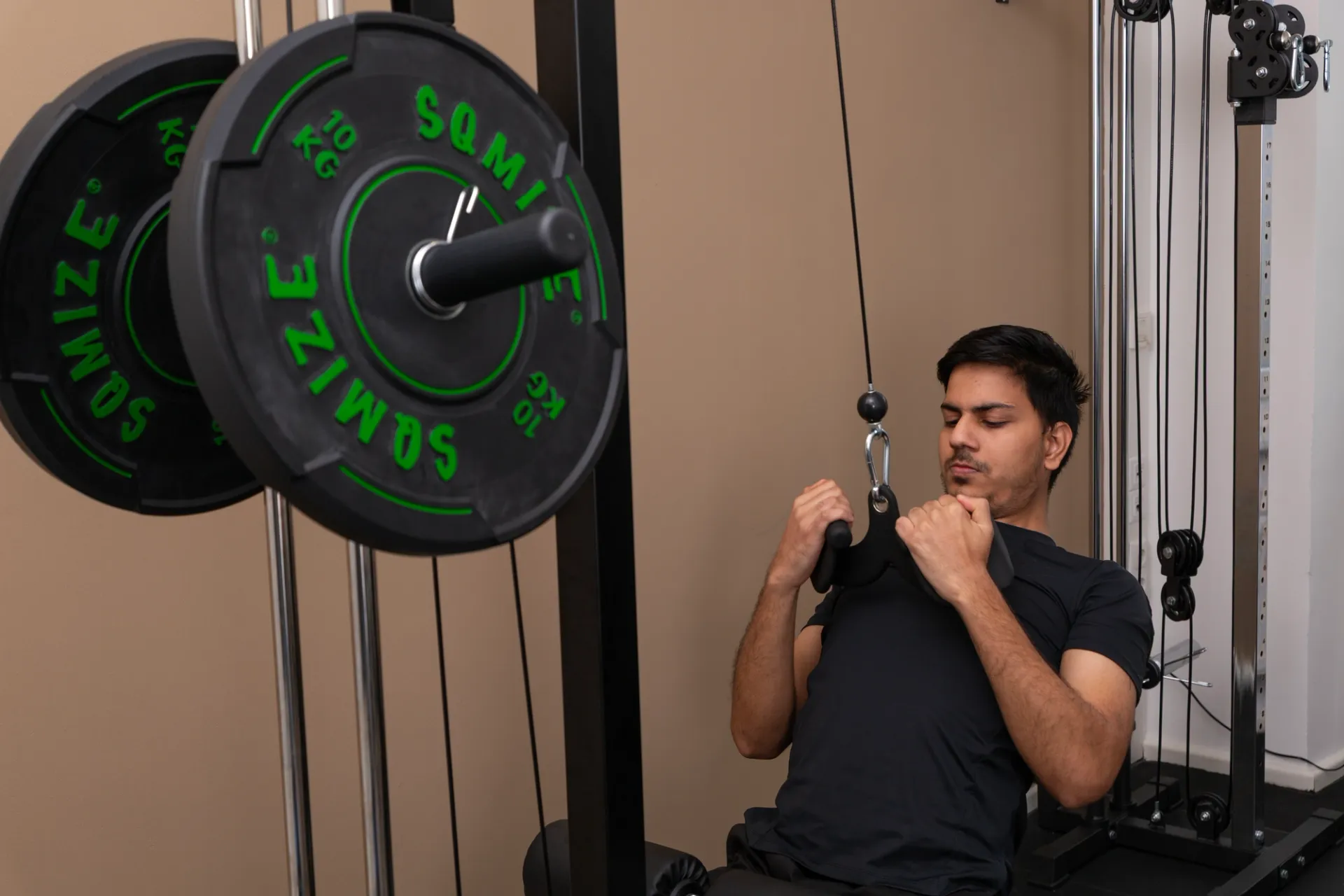
- Free Weights vs. Machines: Free weights, selectorized gym machines, cable stations, and resistance bands all produce equivalent muscle growth and foundational strength gains when exercise intensity and volume are equalized.
- Exercise Complexity and Advanced Sets: Advanced set structures like supersets, drop sets, and rest-pause sets offer time efficiency, but they do not build more muscle or strength than standard sets with normal rest intervals.
- Repetition Tempo: Varying how long a repetition takes—anywhere between 1 and 8 seconds total duration—yields equivalent muscle growth.
- Complex Periodization: Elaborate periodization schemes like daily undulating or wave periodization do not outperform straightforward linear progression in non-elite populations when total work volume is matched.
Key Takeaways for Your Workout Routine
- Define Your Primary Objective: Use heavy weights (80%+ 1-RM) for strength, aim for higher weekly volume (10+ sets per muscle group) for muscle size, and move moderate weights quickly for explosive power.
- Focus on Total Effort, Not Absolute Failure: Work hard during your sets, but leave a repetition or two in the tank to preserve recovery and consistency.
- Choose Equipment You Enjoy: Don't worry about whether machines or free weights are better; focus on progressive overload using the tools you have available.
- Prioritize Movement Quality: Train through a full range of motion and prioritize multi-joint movements early in your workouts.
- Stay Consistent: Training major muscle groups at least twice a week provides the ideal balance for long-term health, strength, and physical resilience.